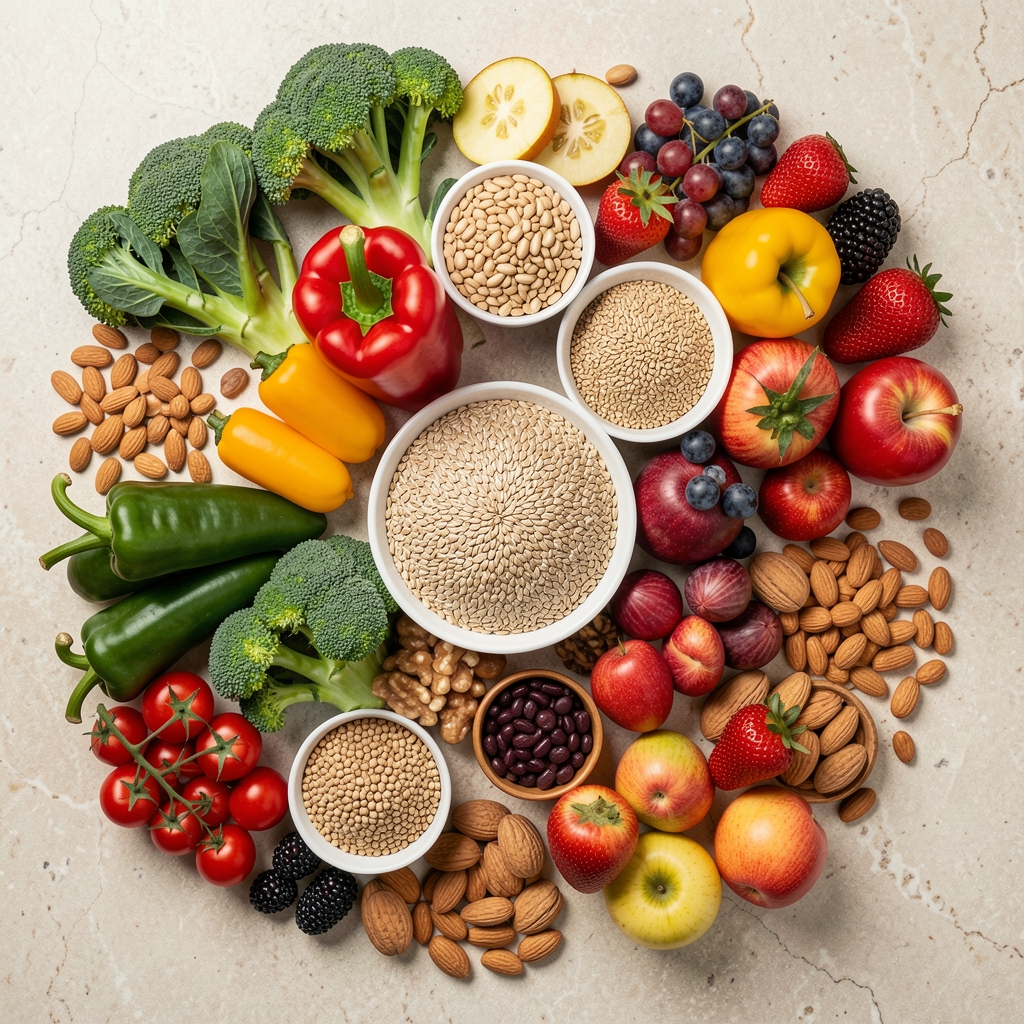
Diet is one of the most extensively studied lifestyle factors in relation to human well-being, and its relationship to male vitality specifically has attracted substantial research attention across epidemiological, physiological, and public health disciplines. This article provides a structured overview of the dietary dimensions most consistently associated with male well-being, focused on general principles and food group context rather than specific substances or compounds.
The Dietary Pattern Perspective
Contemporary nutritional science has largely moved away from single-nutrient or single-food models and toward what is called the dietary pattern approach. This framework recognizes that foods are consumed together, in combinations, over extended time periods, and that it is the overall quality and composition of the diet that predicts well-being outcomes most reliably.
Large-scale epidemiological studies — including the landmark PREDIMED trial examining Mediterranean-style dietary patterns — have consistently found that diverse, plant-predominant diets with moderate protein sources and limited processed food content are associated with favorable outcomes across multiple well-being indicators. These findings hold across different population groups and geographic contexts, suggesting they reflect general dietary principles rather than culture-specific practices.
Balanced Plate Guide
The following provides a general framework for understanding food group balance as described in mainstream nutritional guidance. This is a descriptive overview, not a prescription.
Vegetables and Legumes
Form the largest portion of documented well-being-associated dietary patterns. Rich in fiber, micronutrients, and phytochemicals. Associated with favorable cardiovascular and metabolic markers in population studies.
Whole Grains
Complex carbohydrates with intact fiber structures. Distinguished from refined grains by lower glycemic impact and higher micronutrient retention. Associated with more stable energy levels and glycemic response.
Protein Sources
Include both animal-derived (fish, poultry, eggs, dairy) and plant-derived (legumes, nuts, seeds) options. Research increasingly supports dietary variety of protein sources over exclusive reliance on any single category.
Fats and Oils
The type of dietary fat is more relevant to well-being outcomes than total fat quantity, according to current nutritional consensus. Unsaturated fat sources from nuts, seeds, and certain oils are associated with more favorable cardiovascular markers.
Energy Balance and Meal Timing
Energy balance — the relationship between calories consumed and energy expended — is a foundational concept in nutrition, though its implications are more nuanced than simple arithmetic models suggest. Research on meal timing has found that the distribution of food intake across the day interacts with circadian rhythms to influence metabolic outcomes. Patterns in which a larger proportion of calories is consumed in the morning and midday hours, rather than in the evening, have been associated with more favorable metabolic indicators in multiple studies.
Meal frequency — the number of eating occasions per day — has also received research attention, though findings have been less consistent. Both the quality of individual meals and the overall pattern of intake over time appear to be more relevant than frequency alone in determining well-being associations.
Hydration
Fluid intake, while less often discussed in the context of vitality than other dietary factors, has documented relationships with cognitive function, physical performance, and several aspects of metabolic regulation. Research on hydration effects indicates that even mild fluid deficits — below the threshold of noticeable thirst in many individuals — are associated with measurable effects on cognitive performance and mood stability. Adequate hydration appears to be a baseline requirement for other well-being factors to operate optimally.
Ultra-Processed Foods and Dietary Quality
One of the more robust areas of recent nutritional research concerns the category of ultra-processed foods — defined by researchers as foods that have undergone extensive industrial processing and typically contain additives not found in conventional cooking. Studies using the NOVA food classification system have found that high ultra-processed food consumption is independently associated with adverse well-being outcomes even after controlling for total nutrient intake. This suggests that food processing itself, beyond nutrient composition, is a meaningful variable in dietary quality assessment.
The most consistent finding across the nutritional literature is that dietary variety, moderation, and whole-food emphasis are associated with more stable long-term well-being than any specific food or nutrient strategy.
Cultural and Regional Dietary Contexts
Nutritional research has increasingly recognized the importance of cultural and regional context in dietary studies. The Southeast Asian dietary context — including the Indonesian setting — involves food traditions characterized by diverse vegetable use, legume integration, and fermented food elements that appear well-represented in positive well-being associations found in the literature. Rather than viewing these traditions as requiring substitution with imported dietary models, contemporary nutritional science increasingly acknowledges their compatibility with general well-being principles.
This overview does not advocate for any specific dietary approach. Its purpose is to situate dietary factors within the broader framework of well-being influences and to describe the general landscape of nutritional research as it relates to the topic.